Booking your child's first dental appointment is a major milestone — and it can feel just as nerve-wracking for parents as it does for little ones. Having the right child first dentist visit tips up your sleeve can be the difference between a tearful experience and one that sets the foundation for a lifetime of healthy smiles. According to the American Academy of Pediatric Dentistry (AAPD), children should see a dentist by their first birthday or within six months of their first tooth erupting. Yet studies show that nearly 42% of children aged 2–11 have had dental caries in their primary teeth — many of which could be caught early with routine checkups. Here's everything you need to know to make that first visit smooth, stress-free, and even fun.
When Should Your Child See a Dentist for the First Time?
The most common question parents ask is simply: when? The AAPD and the American Dental Association both recommend scheduling a child's first dental visit no later than age one. This early introduction isn't just about checking for cavities — it's about establishing a dental home, getting personalized oral hygiene guidance, and familiarising your child with the dental environment before fear has a chance to take root.
Why Early Visits Matter
Early dental visits allow the dentist to monitor tooth development, check for signs of early childhood caries (ECC), and assess bite alignment. They also give parents practical advice on topics like pacifier use, thumb-sucking habits, and fluoride needs. Research published in Pediatric Dentistry Journal (2025) found that children who had their first dental visit before age two were 40% less likely to require restorative dental work by age five. Starting early is genuinely one of the most impactful child first dentist visit tips any professional can offer.
Choosing a Pediatric Dentist vs. a General Dentist
Pediatric dentists complete an additional two to three years of specialised training after dental school, focusing exclusively on children's oral health, behaviour management, and child psychology. While many general dentists are wonderful with kids, a pediatric dentist's office is designed from the ground up with children in mind — from the colourful décor to child-sized equipment and staff trained in distraction and positive reinforcement techniques. If your child has special healthcare needs or significant anxiety, a board-certified pediatric dentist is especially recommended.
How to Prepare Your Child Before the Appointment
Preparation is everything. The way you talk about the dentist in the days leading up to the visit will shape your child's attitude more than almost anything else. Keep conversations positive, age-appropriate, and honest — without overpromising that it will be completely painless or that nothing will feel strange.
Use Role-Play and Books to Build Familiarity
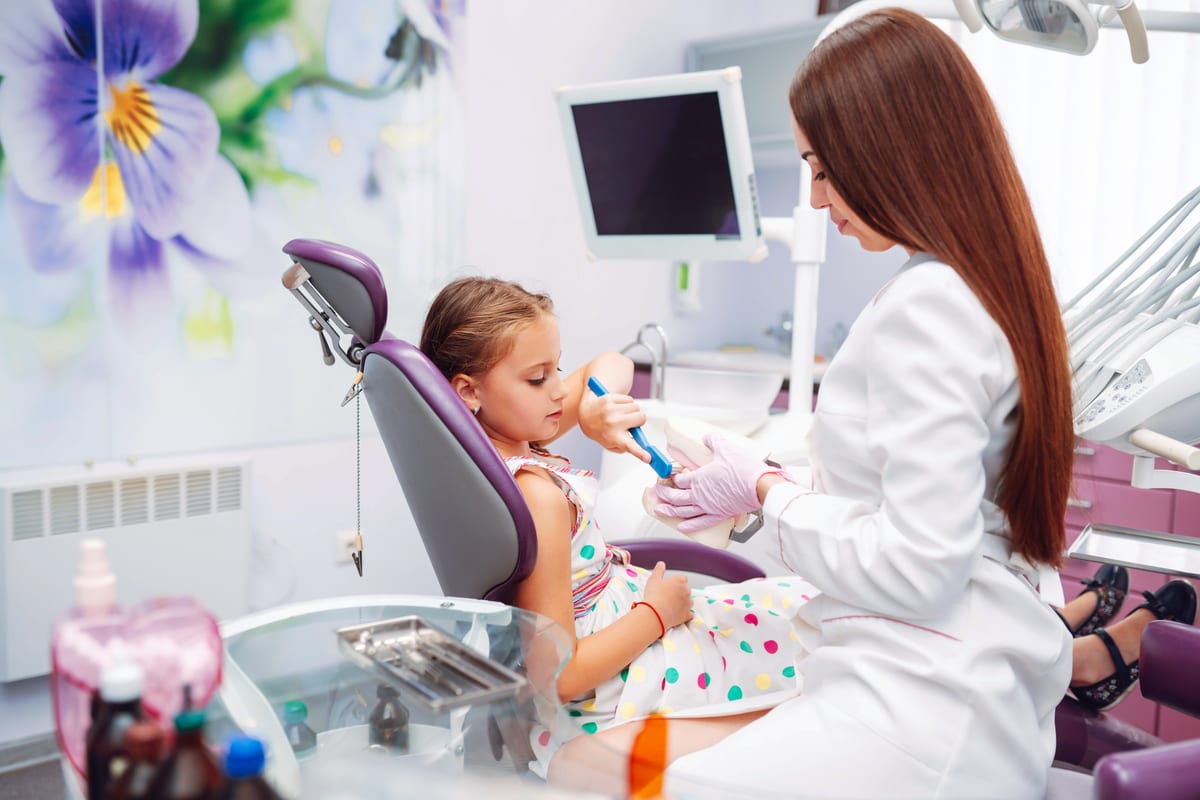
Children learn through play. In the week before the appointment, try playing "dentist" at home — let your child count your teeth with a toothbrush handle, then take turns. Popular picture books like The Berenstain Bears Visit the Dentist or Dora's Show Me Your Smile! can normalise the experience in a low-pressure, entertaining way. Many pediatric dentists also post virtual office tours on their websites — watching one together the night before can dramatically reduce first-visit anxiety.
Mind Your Language: Words to Avoid
Avoid using words like "needle," "shot," "hurt," or "drill" when talking to your child — even in a reassuring context like "it won't hurt." Young children fixate on the negative word, not the qualifier. Pediatric dental offices use alternative language (called "tell-show-do") such as "Mr. Thirsty" for the suction tool and "tooth counter" for the explorer. Follow the dentist's lead and keep your own vocabulary neutral and upbeat. This is one of the most overlooked but highly effective child first dentist visit tips.
What to Expect During the First Visit
For toddlers and very young children, the first visit is typically brief — lasting around 30 to 45 minutes. It usually includes a gentle examination of the teeth, gums, jaw, and bite; a cleaning if the child is cooperative; a fluoride treatment or varnish application; and a conversation with the parent about home oral hygiene routines.
The "Knee-to-Knee" Exam for Toddlers
For children under three, many pediatric dentists use a "knee-to-knee" exam technique. The parent and dentist sit facing each other, and the child lies across both laps — the parent holds the child's hands and body while the dentist examines the mouth. It's a gentle, effective method that keeps young children secure and within sight of their parent throughout the examination. Knowing this in advance helps parents feel more relaxed, which in turn calms the child.
Costs and Insurance for First Dental Visits
In 2026, the average cost of a pediatric dental checkup in the United States ranges from $50 to $200 without insurance, depending on the region and whether X-rays or fluoride treatments are included. The good news: most dental insurance plans, as well as CHIP (Children's Health Insurance Program), cover preventive pediatric dental care at 100% — meaning your child's first visit could cost nothing out of pocket. Always verify coverage before booking, and ask the dental office if they offer new-patient specials or sliding-scale fees if you're uninsured.
Building a Positive Dental Routine After the First Visit
The first appointment is just the beginning. The habits formed in early childhood set the trajectory for a lifetime of dental health. After a successful first visit, momentum is your best friend.
Establish a Twice-Daily Brushing Habit
Children under three should have their teeth brushed by a parent using a soft-bristled toothbrush and a rice grain-sized smear of fluoride toothpaste. From ages three to six, increase this to a pea-sized amount, and supervise brushing until around age seven or eight when manual dexterity improves. Fun electric toothbrushes featuring favourite characters, brushing timer apps, and reward charts all help make brushing less of a battle and more of a routine.
Schedule Regular Six-Month Checkups
The AAPD recommends checkups every six months for most children, though your dentist may recommend more frequent visits if your child is at higher risk for cavities. Consistency matters enormously — children who attend regular dental appointments are significantly less likely to develop dental anxiety and are more likely to continue visiting the dentist into adulthood. Put the next appointment on the calendar before you leave the office.
Handling Dental Anxiety in Children
Some degree of worry is completely normal, especially for first-time visits. However, dental anxiety affects roughly 20% of children to a degree that makes routine care challenging. The good news is that pediatric dentists are trained in a wide range of behaviour management techniques that go far beyond simply distracting a child with a sticker at the end.
Techniques commonly used include tell-show-do (explaining, demonstrating, then performing each step), positive reinforcement, the "ask-tell-ask" communication model, and in more complex cases, nitrous oxide (laughing gas) sedation. Nitrous oxide is safe, fast-acting, and widely used in pediatric dentistry — with the effects wearing off within minutes of the mask being removed. If your child has significant anxiety, discuss sedation options with the dental office when you book.
Frequently Asked Questions
At what age should a child first visit the dentist?
The American Academy of Pediatric Dentistry recommends that a child's first dental visit occur by their first birthday, or within six months of their first tooth appearing — whichever comes first. Early visits help catch developmental issues early and build positive associations with dental care from a young age.
How do I calm my child before a dentist appointment?
Stay calm yourself — children pick up on parental anxiety quickly. Read books about dentist visits, play pretend dentist at home, and use simple, positive language. Avoid the word "hurt" or "needle." Schedule the appointment at a time when your child is well-rested and fed, and bring a comfort item like a favourite small toy or stuffed animal if the office allows it.
How long does a child's first dental visit take?
Most first dental visits for young children last between 30 and 45 minutes. The appointment typically includes a gentle examination, a basic cleaning if the child is comfortable, fluoride application, and a parent consultation. For very young toddlers, the visit may be shorter and more focused on familiarity and assessment.
Is fluoride safe for young children?
Yes. Fluoride is safe and highly effective at preventing tooth decay. The AAPD recommends fluoride toothpaste for children as soon as the first tooth erupts, using a smear the size of a grain of rice until age three. Professional fluoride varnish applied by a dentist is also safe and recommended twice yearly for children at moderate to high cavity risk.
What if my child refuses to open their mouth at the dentist?
This is very common and experienced pediatric dentists are prepared for it. They use gentle behaviour guidance techniques and may choose to reschedule non-urgent care to allow the child more time to warm up to the environment. Never force a child's mouth open yourself, and try not to show frustration — patience and positive reinforcement across multiple visits typically resolve resistance in most children.
Does dental insurance cover a child's first visit?
Most private dental insurance plans and government programs like CHIP cover preventive pediatric dental visits — including exams, cleanings, and fluoride treatments — at 100% with no cost to the family. Always confirm your specific plan's benefits before the appointment. If you're uninsured, ask about Medicaid eligibility or community dental clinics that offer low-cost pediatric care.
Conclusion
Preparing for your child's first dentist visit doesn't have to be stressful. With the right mindset, a little advance preparation, and the expert child first dentist visit tips outlined above, you can help your child walk out of that dental office with a smile — and an attitude toward oral health that will serve them for life. The key is to start early, stay positive, and choose a dental provider who truly specialises in caring for young patients. Ready to find a trusted, top-rated pediatric dentist in your area? Visit Top5Dentists.com to browse verified, highly reviewed dental professionals near you and book your child's first appointment with confidence.